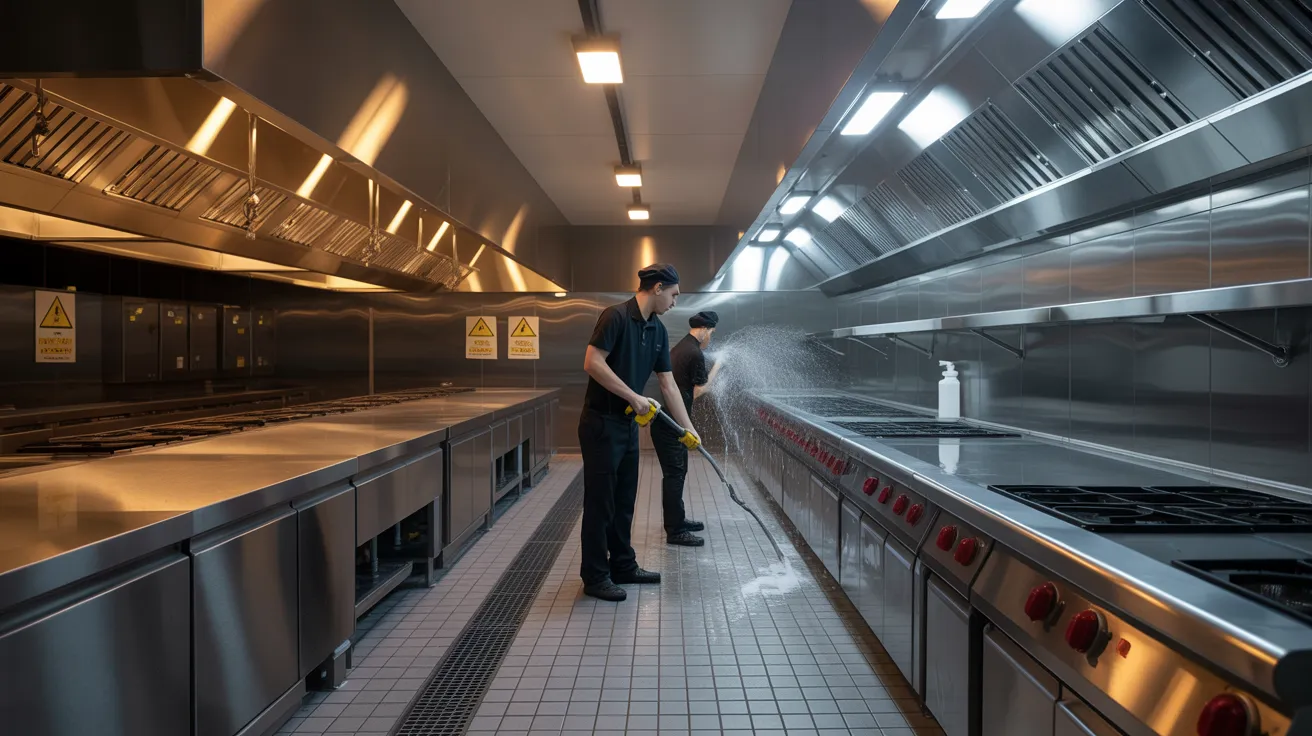
Commercial cleaning and food safety professionals in Brampton assist food establishments, commissaries, baking facilities, warehouses, and food service operations staying compliant. They sanitize regularly touched surfaces, food preparation surfaces, equipment, floors, drains, restrooms, and prep zones using certified products, at correct dilution, and recording exposure duration. You require scheduled cleaning based on hazard level, volume, food allergies, and inspections, along with verification records that support Hazard Analysis Critical Control Points, audits, and public health compliance. The sections below outlines how effective cleaning systems should include.
Key Takeaways
- Brampton's sanitation specialists provide services to restaurants, grocery departments, commissaries, warehouses, bakeries, schools, mobile vendors, and allergen-sensitive operations.
- They disinfect high-touch surfaces, food-contact equipment, kitchens, floors, drains, restrooms, and storage areas using zone-based workflows to prevent cross-contamination.
- Validation of approved sanitizer dilution, compatibility, and contact time is completed by certified vendors, with finishing recorded using tests, audits, and remedial documentation.
- Threat, throughput, changeovers, incidents, and standards need to inform cleaning schedules, with everyday, weekly, and seasonal activities designated by section.
- Liability, color-categorized tools, hazard analysis knowledge, public-health understanding, WHMIS instruction, endorsements, and audit-ready hygiene paperwork are important supplier characteristics.
Food Safety Cleaning Requirements for Brampton Facilities
Any Brampton facility that processes, stores, prepares, packages, or distributes food needs sanitation protocols. You must follow it if your operation falls under health inspection, premises standards, or HACCP protocols. That requirement covers food service venues, employee cafes, supply centers, retail departments, meat shops, fish areas, local stores, and institutional food prep areas.
You'll also need adherent sanitation standards in warehouses, food manufacturing plants, cold storage sites, retail bakeries, school nutrition programs, essential information banquet halls, and meal delivery hubs. Portable business models are included, such as food trucks, event sellers, and temporary stalls. If your staff work with ingredients, section ready-to-serve foods, heat meals, or keep allergens stored, your location requires recorded sanitation procedures. In Brampton, food safety remains compulsory; it comprises statutory, functional, and public health compliance.
What Do Brampton Cleaning Professionals Handle?
Your facility requires professional cleaners who sanitize all high-touch areas, cooking and food prep areas, floors, and toilet facilities to maintain food safety compliance and public health standards. These specific areas are emphasized due to their elevated cross-contamination potential, hazardous walking conditions, and violations of hygiene standards.
If you grasp what they sanitize, you'll successfully ensure your operation satisfies required operational and regulatory standards.
Focusing on High-Touch Surface Sanitizing
Brampton sanitation experts emphasize high-touch surface sanitizing because these touch areas can spread bacteria, viruses, and food residue throughout a space. You need a scheduling system for sanitizing door handles, push plates, switches, railings, shared equipment controls, POS terminals, and refrigerator pulls. Implementing area assessment techniques, professionals locate every commonly touched zone and determine cleaning intervals
validate that disinfection was proper
Cooking Zones, Walking Surfaces, and Restroom Environments
Brampton cleaning services zero in on kitchens, floors, and restrooms as each zone involves different food safety, accident, and wellness risks. In industrial kitchens, you need grease removal from cooking stations, appliance surfaces, drain systems, preparation areas, and backsplashes to minimize contamination and pest pressure.
Professional floor care with documentation is also included. is also provided as part of the service.
Restroom cleaning involves disinfecting surfaces, fittings, separators, dispensers, and containers, replenishing amenities and managing odor. They also maintain restaurant cleaning supply rooms where product storage, sink cleanliness, and drain systems impact daily sanitation standards and worker protection.
The Importance of Food Safety Cleaning in Brampton
Brampton operations demand proper hygiene standards to fulfill compliance obligations and pass inspections. You also minimize bacterial spread through proper cleaning of food-preparation surfaces, appliances, and frequently-touched items. Most importantly, you safeguard community wellness by reducing the chance of food poisoning in your establishment.
Health Code Compliance
Brampton food establishments must comply with stringent health requirements, so cleaning procedures is vital to adhering to health codes, safeguarding customers, and preventing penalties. You must maintain sanitary food-contact surfaces, written maintenance records, appropriate product handling, and traceable training practices that meet municipal and provincial inspection expectations.
Failure to maintain cleaning standards creates risks citations, corrective orders, brand harm, and operational suspension during subsequent audits or compliance reviews.
Cross-Contamination Prevention
Maintaining health code standards copyrights on your capacity to prevent cross-contamination during everyday food preparation and sanitation. You need to partition uncooked items from finished dishes, sanitize prep surfaces between tasks, and position cleaning agents away from food surfaces. Explicit protocols lower contamination threats and reinforce steady regulatory adherence.
You might establish allergen separation to stop main allergens from reaching common areas, containers, or machinery. Apply separate boards, color-marked equipment, and rigorous tool identification so team members avoid blending products throughout cooking or delivery. Mandate handwashing after handling uncooked meat, fish, egg products, or allergens. Change wiping cloths regularly, and check sanitizer strength with test strips. When employees learn these procedures every shift, you create a cleaner, safer operation that meets Brampton's food safety expectations daily.
Public Health Safeguarding
If food safety cleaning deteriorates, you don't merely face potential inspection issues—you boost the probability of pathogenic contamination affecting customers, staff, and the broader Brampton region. You also weaken your role in safeguarding community wellness, especially in busy food facilities where contamination can spread quickly through surfaces, equipment, and touchpoints.
You need sanitation procedures that eliminate contaminants, sanitize correctly, and verify results. That means following contact times, employing authorized sanitizers, recording cleaning times, and training staff to meet regulatory standards. These measures facilitate pathogen reduction by reducing pathogens before they contaminate surfaces or food. In Brampton, strong sanitation shields at-risk groups, prevents disease spread, and enables you to show due diligence. When you clean to standard, you don't just meet regulations—you substantially decrease danger and promote secure food handling throughout the region.
How Does Cleaning Support Food Safety Compliance?
Adopting strict sanitation practices secures food safety compliance by lowering contamination exposure, preventing pathogen multiplication, and maintaining your facility's adherence to sanitation requirements under HACCP-based programs and public health regulations. You verify that food-contact surfaces remain visibly clean and microbiologically controlled, facilitating documented preventive controls and inspection readiness.
Cleaning programs additionally fortify allergen mitigation by extracting residues that can lead to undeclared allergen exposure.
How Should You Plan Commercial Cleaning Work?
Routines for cleaning perform best when developed based on risk assessment, output volume, and compliance standards instead of just a predetermined calendar.
Handling occasional tasks separately guarantees better planning.
Finding Quality Brampton Cleaning Experts: A Guide
Evaluate providers first by sanitation compliance standards rather than cost. You must ensure each provider understands CFIA, public health, and HACCP requirements for your business. Request insurance proof, WHMIS compliance, staff training documentation, and supervision methods. Check technician understanding of contamination prevention, chemical handling, and documented sanitation practices.
You must also evaluate operational reliability and oversight. Seek references from Brampton food companies, then assess response speed, corrective processes, and communication quality. Ensure the company supports supplier audits and can provide inspection-compliant records when authorities or third parties demand verification. Verify equipment care, colour-coded tools are deployed correctly, and operational-specific risks are understood. A reputable service protects compliance, product safety, and your brand reputation.
What's covered in a sanitation cleaning strategy?
Write out a framework that defines every sanitation activity, guideline, and role before production begins. You should record cleaning schedules, approved products, ratios, contact periods, tools, and validation approaches for each zone, surface, and piece of equipment. Ensure you include pre-operational inspections, corrective actions, and employee training requirements.
Your strategy should also focus on cross-contamination controls, waste handling, pest-prevention measures, and documented schedules for rest areas, drains, flooring, and food-contact surfaces. Describe how you'll keep raw and ready-to-eat processes separate, support ingredient tracking, and ensure accurate allergen labeling through validated cleaning between product changes. You should assign accountability, keep signed records, and review results against regulatory standards, HACCP controls, and customer requirements. When gaps appear, modify procedures immediately and instruct staff.
Commonly Requested Inquiries
Do cleaning services work during nighttime hours at Brampton facilities?
Yes, you can book sanitation coverage to support overnight shifts in Brampton facilities. You'll coordinate nighttime cleaning around operational windows, security protocols, and personnel needs. Services typically establish overnight logistics to minimize disruption, maintain standards, and record finished tasks. You should confirm arrival schedules, supervision, lockout protocols, and disposal procedures before starting service.
Will Brampton cleaning experts respond to hazardous incidents?
Yes, you can discover many Brampton sanitation experts providing hazard containment services. They handle hazardous incidents, evaluate risks, contain affected zones, and begin swift decontamination to minimize exposure and avoid operational impact. You should verify response rates, certifications, safety protocols, and waste procedures. If your facility must meet compliance standards, select a service that documents events, adheres to standards, and supports verification.
Are plant-based disinfectants safe for food preparation areas?
Absolutely, plant-based sanitizers remain safe for food-handling equipment when you choose products labeled food safe and regulatory compliant. You must validate contact duration, dilution rates, and rinse protocols in advance of use. Botanical formulations decrease chemical hazards, though you require evidence of effectiveness against harmful bacteria. For keeping surfaces residue-free, stick to manufacturer directions precisely and verify your disinfectant meets food industry regulations.
Can sanitation programs be customized for seasonal production changes?
Without question, maintenance plans are highly adaptable for seasonal variations. Modify intervals, personnel, chemicals, and validation steps to correspond to seasonal patterns while sustaining regulatory requirements. Reduce production interruptions by scheduling cleaning amid production shifts, high demand periods, and usage cycles. Additionally revise standard operating procedures, instruction programs, and environmental monitoring to capture temporary risks, emerging allergens, or elevated soil levels. Consistent reviews maintain your plan effective.
Do professional cleaners instruct your team in proper hygiene techniques?
Yes, commercial cleaners typically educate your staff on sanitation best practices. You receive staff training on correct chemical application, contact times, cross-contamination prevention, equipment disassembly, and documentation. They typically align training with HACCP, GMP, and CFIA or regional health department requirements. Many perform sanitation audits to confirm adherence, spot deficiencies, and reinforce corrective actions. This allows you to maintain consistent procedures, succeed in audits, and minimize contamination hazards daily.
Closing Remarks
Through working with Brampton food safety and commercial cleaning specialists, you accomplish much beyond organizing—you ensure your facility for inspections and your procedures stay aligned with regulations. From production floors to kitchens, all clean areas and kept corners reduce contamination risks and prevent significant costs. Through scheduling maintenance at proper intervals and adhering to a comprehensive cleaning program, you safeguard your team, your patrons, and your good name. Within strict regulatory frameworks, proper sanitation must be a priority—they are fundamental to success.